
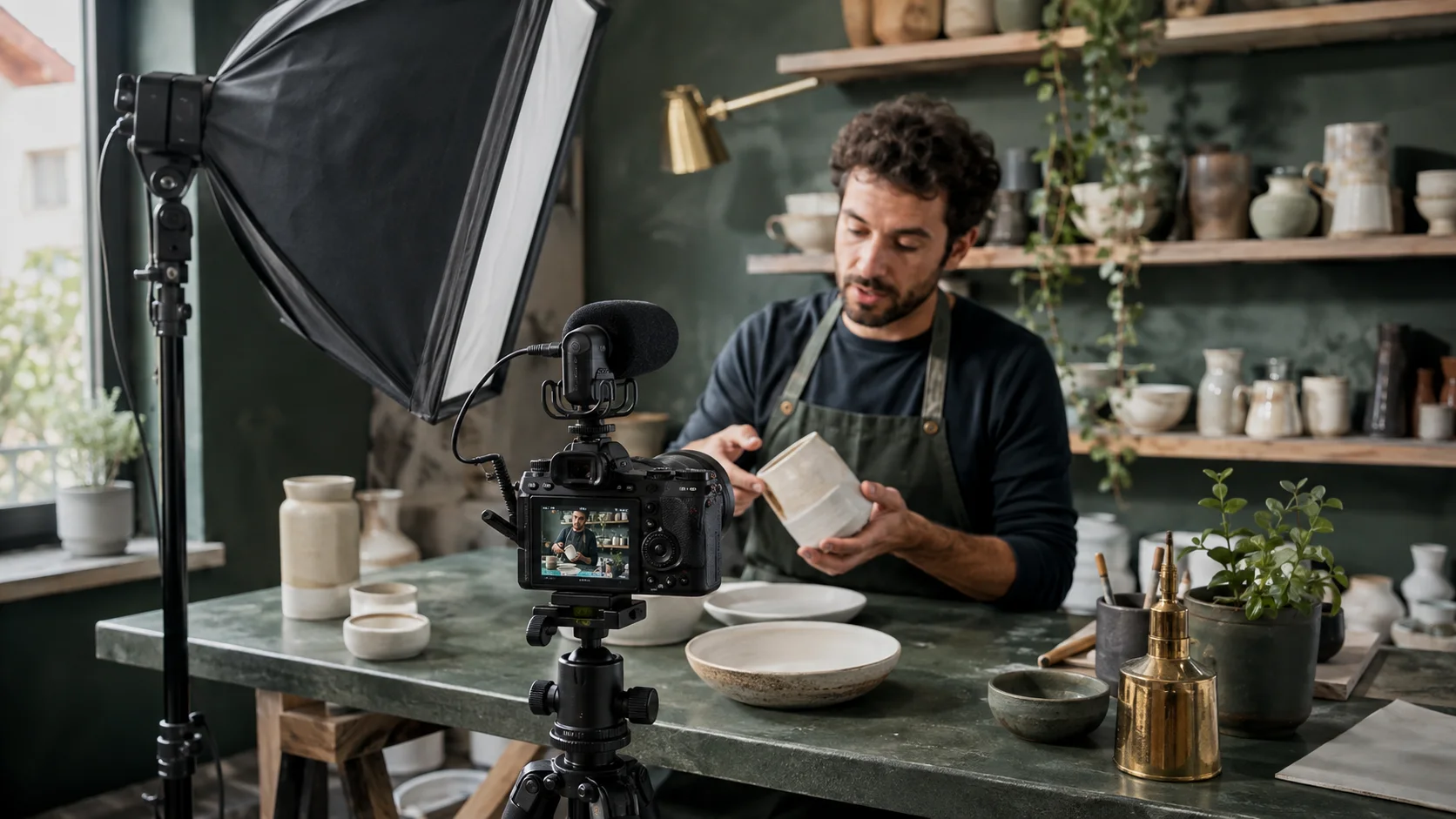
The equipment that makes the difference
Light comes first. A ceiling strip light creates hard shadows under the eyes and flattens everything else; a window behind the subject turns people into dark silhouettes. No app corrects bad lighting after the shoot: you can only reshoot.
Audio is second, and it is the most underrated. A phone microphone picks up everything: the room’s reverb, the air conditioning, the street. People forgive a mediocre image, but they stop watching a video that sounds bad within seconds.
Third is stability, together with framing. A handheld camera, a crooked horizon and an off-centre subject all communicate haste. Which is a shame, because the work you are showing is usually done with care.
- Light: soft and in front of the subject, never behind
- Audio: a dedicated microphone, away from reverb and noise
- Stability: tripod or gimbal, a level horizon
- Vertical 9:16: shoot for the format it will be watched in
Shoot in blocks, not one video at a time
The most common organisational mistake is producing a video when one is needed. That means setting up lights, audio and equipment every single time for one piece of content, and it ends with nothing being shot at all.
People who work well do the opposite: they concentrate the filming into one session and come away with weeks of material. The same lights, set up once, serve ten scenes, and the cost per piece collapses.
This does require the editorial plan to exist before the shoot. You have to know what you will publish in the following weeks, otherwise you shoot generic material that turns out to be useless.
Does somebody need to be in front of the camera?
It depends, and there is no single answer. Content with a face creates more familiarity: the viewer associates a face with the business and remembers it. Content without a face — hands at work, details, before and after — works very well when the trade is visual, and does not require anybody to be comfortable on camera.
The point is sustainability. If the owner is not comfortable, it shows, and after two videos they stop. Better a faceless format done consistently than a talking format abandoned after three weeks.
There are three options: the owner appears, somebody from the staff appears, or you bring in a professional presenter. The choice between a man and a woman is made by looking at who your service speaks to, not at personal preference.
What to prepare before the shooting day
An improvised shooting day produces little and tires everybody. A prepared one produces weeks of content and finishes early.
You need to know which scenes are needed and for which messages, which spaces can be used and at what hours the natural light helps, who appears and at what times you can shoot without stopping the work. And the spaces need to be tidy: a detail out of place in shot shows far more on video than in the room.
- A list of scenes, tied to the editorial plan for the coming months
- A site visit covering spaces, natural light and noise
- The time bands in which you can shoot without blocking the business
- Who appears, and in what role
- Tidy spaces: on camera everything shows
Shooting is not enough: editing and consistency count
Most of the footage never gets used, and that is normal. The value comes from the selection: which seconds to keep, where to cut, what goes in the first three seconds, which are the ones that decide whether anybody stays.
Subtitles are not an accessory: a large share of social video is watched without sound. A video with no on-screen text loses a substantial slice of the audience before it even starts.
And then there is consistency. One good video now and again counts for far less than regular content done decently. Consistency is what the algorithms reward and what an audience recognises.
Frequently asked questions
Can you make professional video with a high-end phone?
Yes, the camera is not the limit: plenty of professional content is shot on recent phones. What is needed around it is controlled light, clean audio, direction of the scene and the time to do it. Those are the things that are missing, not megapixels.
How much content comes out of one shooting day?
It depends on the number of scenes and locations, but shooting in blocks a session normally covers several weeks of publishing. That is why it pays to concentrate the filming instead of producing one video at a time.
Do I have to appear in the videos?
No. Somebody from the staff can appear, you can use a professional presenter, or you can build faceless content around hands, details and the work itself. Sustainability over time matters more than the choice itself.
Do we have to close the business to shoot?
Normally no, and it is often counterproductive: footage shot while you work is the most credible. The time bands are agreed during the site visit so as to stay out of the busiest moments.
Is video useful if I already publish photos?
The two do not exclude each other. Video holds distribution better on most platforms, but a plan made only of video is hard to sustain: a combination of formats is almost always more solid.
This is how we work on it
- On-site video shootingA photographer, lights and lenses, filmed where you work.
- Video packagesFrom 5 to 20 videos a month, monthly fee.
Sources
- Google Search Central, video best practices — How to make a video understandable and indexable.
- Instagram, professional accounts and tools for businesses — The formats and tools the platform makes available to businesses.
Back to SWA Journal